

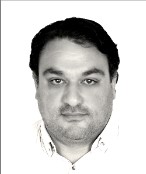
Homayonreza Shahbazkia
DVM, PhD
Dosemealti,Antalya
Summary
Homayonreza Shahbazkia is a doctor of veterinary medicine (DVM) with a Ph.D. Degree in Biochemistry. Throughout the life, he's never stood still, always on the lookout for new opportunities to progress personally and positively influence society.
He has been involved in education, teaching, and lecturing at university, pre-university, high-school, secondary and lower secondary grades (more than 15 years), performing professional scientific researches and producing many scientific articles (more than 12 years), innovation, business development and ownership, management, and leadership (more than 12 years).
After years of experience, he has realized that of all the things he's done, education and teaching, particularly to young learners, is the only thing he is truly passionate about. It's a case that moves him with amazing strength, draws him in, and makes him feel energized and delighted.
He believes that human society requires two main capitals in order to maintain its quality of life. One is the environment, while the other is children and the young. With proper education and training the first can be favorably influenced by the second. Currently, upgrading his knowledge in Education and Pedagogy doing PGCE (Post Graduate Certificate in Education) and is passionate about teaching and educating young individuals using the Cambridge syllabi and curriculum in all science subjects (Chemistry, Biology, Physics, Maths, Animal Science, Environment, and Nutrition) as well as practical converting waste material (eg. Food and fish wastes) to valuable products using biological and biochemical knowledge to help environmental sustainability by reducing carbon emissions.
Overview
21
21
years of professional experience
12
12
years of post-secondary education
3
3
Languages
Work History
Scientific Manager, Business Owner
Shahbaz Co.
1 2018 - Current
Skills: Presentations · Scientific Writing and Publication · Veterinary Medicine · Science Education · Animal Science · Lecturing · Presentation Skills · Research Skills · Animal Farming and Production · Time Management · Animal Training · Teaching · Laboratory Skills · Biochemistry · Research Planning · Chemistry · Mathematics · Organization Skills · Veterinary Sciences · Nutrition, Metabolism · Biology
Science Tutor
Self-employed
01.2003 - Current
- Cambridge Lower Secondary, Secondary, IGCSE, As, and A level Science, Biology, Chemistry, Physics, and Mathematics. Higher Education Biochemistry, Biophysics, Biology, Statistics, Research Methods.
Getting students ready for assessments such as Cambridge Checkpoint, Cambridge O-level, IGCSE, and A-level exams. - Skills: Teaching · Biology · Chemistry · Physics · Education · Science Education · Lesson Planning · Time Management · Presentations · Training · Laboratory Skills · Biochemistry · Lecturing · Cambridge IGCSE, AS, A level assessments · Cambridge IGCSE, AS, A level Syllabus and Curriculum ·
Assistant Professor and Lecturer
Shahrekord University
01.2008 - 01.2014
- Teaching Biochemistry and Biology to undergraduate and graduate students.
Teaching Biochemistry, Biology, Genetics, Chemistry, and Biostatistics to Undergraduate students.
Idea development, Research planning, Research, and Publication. - Skills: Biology · Biochemistry · Chemistry · Education· Physics · Lecturing · Teaching · Science Education · Lesson Planning · Laboratory Skills · Research Planning · Research Skills · Scientific Writing and Publication · Time Management · Presentation Skills · Mathematics and Biostatistics · Organization Skills · Nutrition, Metabolism ·
Scientific Manager, Project Manager
Tehran Milad Tower Dolphinarium
01.2013 - 01.2018
Skills: Presentations · Scientific Writing and Publication · Veterinary Medicine · Science Education · Animal Behavior · Animal Science · Business Development · Lecturing · Presentation Skills · Research Skills · Time Management · Marine Mammals · Coaching · Operations Management · Animal Training · Teaching · Laboratory Skills · Biochemistry · Research Planning · Chemistry · Organization Skills · Marine Animal Biology · Biology
Lecturer
Shahrekord University
01.2005 - 01.2008
- Teaching Biology, Biochemistry, Genetics, Chemistry, Statistics
Education
PGCE (Post Graduate Certificate in Education) - Education/ Pedagogy
University of Essex
United Kingdom 03.2024 - Current
Ph.D. - Biochemistry
Shiraz University
Iran 02.2004 - 02.2009
DVM (Doctor of Veterinary Medicine) - Veterinary Medicine
Shahrekord University
Iran 09.1996 - 07.2003
Skills
Teaching, Lecturing, Lesson Planning,
Education, Science Education, Pedagogy
Biology, Biochemistry, Chemistry, Physics, Mathematics, Laboratory Skills
Cambridge IGCSE, AS, A Level Curriculum, Syllabus, and Assessments
Research Skills, Scientific Writing, Presentation, Time Management, Organization, Team Development
Veterinary Science, Animal Sciences, Behavior and Training, Nutrition and Metabolism
Business Development and Entrepreneurship
Birth Location
Tehran, Iran
Personal Information
- Number of Children: 1
- Date of Birth: 04/19/1977
- Nationality: Iranian
- Marital Status: Married
Scientific Publications
1. Association of polymorphism of the β(1, 4)-galactosyltransferase-I gene with milk
production traits in Holsteins. Molecular biology reports 39, 6715-6721
2. Associations among milk production traits and glycosylated haemoglobin in dairy
cattle; importance of lactose synthesis potential. Veterinary research communications 34,
1-9
3. Polymorphisms of the β-1, 4 galactosyltransferase-I gene in Holsteins. Livestock
Science 131 (2-3), 297-300
4. Bone-specific alkaline phosphatase as a good indicator of bone formation in
sheepdogs. Comparative Clinical Pathology 16, 265-270
5. Evaluation of pathogenic serovars of Leptospira interrogans in dairy cattle herds of
Shahrekord by PCR. Iranian Journal of Microbiology 3 (3), 135-141
6. The Morphological Characterization of the Blood Cells in the Central Asian
Tortoise(Testudo horsfieldii ). Veterinary Research Forum. 3: 134 - 141
7. Distribution of the enzyme rhodanese in tissues of the cat (Felis catus). Journal of
Feline Medicine & Surgery 11 (4), 305-308
8. Purification and kinetic study of bone and liver alkaline phosphatase isoenzymes in the
dog. Comparative clinical pathology 19, 81-84
9. Distribution of arginase in tissues of cat (Felis catus). Journal of Feline Medicine &
Surgery 9(2):133-9
10. Glycated hemoglobin is an indicator of blood glucose status in horses: preliminary
study. Journal of Equine Veterinary Science 30 (1), 47-49
11. Polymorphism of Casein Gene in Iranian Holsteins. Iranian Journal of Biotechnology
12 (1), 56-60
12. Fresh autogenous and allogenous tendon graft in rabbit model. Comparative Clinical
Pathology 20, 109-113
13. Glycated haemoglobin (HbG) as a stable indicator of blood glucose status in ostrich.
Comparative Clinical Pathology 17, 9-12
14. Determination of glycated haemoglobin in horses by cation exchange
chromatography. Comparative Clinical Pathology 14, 168-170
15. Determination of alkaline phosphatase isoenzymes and isoforms in dog serum by a
simple anion exchange chromatographic method. Comparative Clinical Pathology 18,
427-432
16. Comparative studies on the interaction of proteinase-K with nano-CuO and copper
ions. Journal of Nanostructures 2 (1), 35-41
17. Determination of glycated haemoglobin (HbG) and its correlation with plasma
glucose in Iranian fat-tailed sheep and lamb. Online Journal of Vet Res 12, 7-13
18. Serum and urine biochemistry of Central Asian tortoises (Testudo horsfieldi).
Comparative Clinical Pathology 22, 1173-1176
19. Glycosylated hemoglobin is a good indicator of blood glucose status in persian cats.
Comparative Clinical Pathology 22, 1225-1228
20. Role of Coral, Demineralized Calf Fetal Growth Plate, and a Combination of the Two
in Healing of Bone Defects in Rabbits. Trauma Monthly 22 (2)
21. Clinical Evaluation of Repeated Propofol Total Intravenous Anesthesia in Dog.
Pakistan Journal of Biological Sciences 11(14):1820-4
22. Determination of glycated haemoglobin (HBG) and its correlation with fasting plasma
glucose in the camel. Journal of Camel Practice and Research 16 (2), 163-165
23. Buffered alkalization of lidocaine hasten the onset of peripheral nerve block in rat.
Regional Anesthesia & Pain Medicine 31 (Suppl 2), 6-6
24. Faster onset and prolonged duration of sciatic nerve block by alkalinization of
lidocaine epinephrine with borate buffe. Regional Anesthesia & Pain Medicine 31 (Suppl
2), 7-7
25. A novel continuous electrophoresis method for purification of hen eggwhite
lysozyme. FEBS Journal 273, 138-138
Timeline
PGCE (Post Graduate Certificate in Education) - Education/ Pedagogy
University of Essex
03.2024 - Current
Scientific Manager, Project Manager
Tehran Milad Tower Dolphinarium
01.2013 - 01.2018
Assistant Professor and Lecturer
Shahrekord University
01.2008 - 01.2014
Lecturer
Shahrekord University
01.2005 - 01.2008
Ph.D. - Biochemistry
Shiraz University
02.2004 - 02.2009
Science Tutor
Self-employed
01.2003 - Current
DVM (Doctor of Veterinary Medicine) - Veterinary Medicine
Shahrekord University
09.1996 - 07.2003
Scientific Manager, Business Owner
Shahbaz Co.
1 2018 - Current