

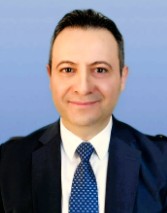
FATİH ERDOĞAN
ÇANKAYA,ANKARA
Summary
I am an experienced Air Force officer with 28 years of expertise in military aviation, the defence industry, and diplomacy. I began my career in 1998 as a navigator in the Turkish Air Force, participating in flight missions on military transport aircraft and NATO E-3A AWACS aircraft. I have accumulated 4,500 flight hours on both manned and unmanned aircraft.
After completing first master's degree in space policy and law at the Air Force Institute, pursued a second master's degree in engineering management and systems engineering at Old Dominion University in the USA, on behalf of the Turkish Air Force Command.
Over the years, gained extensive experience in military aviation, the defence industry, and diplomacy.
Upon completing master's degrees in 2006, I served as a project officer in the Space Department of the Turkish Air Force, contributing to key space-related projects.
I have held significant roles abroad, including three years within NATO and more than two years as a Military Attaché at the Turkish Embassy in Algeria.
In the defence industry, played a pivotal role in the development of space systems and UAV systems. managed the ANKA UAV project for the Turkish Air Force and later worked as UAV Operations Commander in its operational phases. Additionally, completed pilot training for the ANKA UAV system, further enhancing my expertise in this field.
Following successful tenure as a military attaché in Algeria, I currently serve at the Ministry of National Defence, overseeing military attachés. In this role, the strong relationships I have built with foreign attachés to our country, as well as Turkish attachés worldwide, I have significantly enhanced the effectiveness of my duties.
I possess in-depth expertise in leadership, project management, and international relations. With extensive flight experience in both manned aircraft and UAVs, I bring a unique perspective to aviation and defence projects. Proficient in both French and English, I am able to effectively communicate in my international assignments and projects.
Overview
29
29
years of professional experience
7
7
years of post-secondary education
1
1
Certification
Work history
Military Attachés Department Head
Ministry of Defence
Ankara, Türkiye
2022.12 - 2025.03
- Currently serving in the Military Attachés Department Directorate . This unit is responsible for coordinating foreign military attachés serving in our country and Turkish military attachés serving in various countries around the world. All military attachés operate under the authority of our directorate.
- The number of countries with military attachés in our country is 96, while the number of military attachés affiliated with the Ministry of National Defence abroad is 98 which is one of the highest ranking in the world.
- These duties include coordinating, collaborating, and conducting correspondence with foreign military attachés in our country, ensuring the accreditation of attachés, and organizing various events, visits, and information activities to promote our country's Ministry of National Defence and defence industry.
- Another important responsibility is addressing the issues and needs of foreign military attachés and taking the necessary actions. I also represent our country by attending the National and Armed Forces Days of the relevant countries, in accordance with the principle of reciprocity.
- Additionally, the directorate is responsible for the training, coordination, and monitoring of the activities of Turkish military attachés serving in various countries. During this process, all activities related to the administrative, financial, personnel, and assignment matters of our attachés are closely executed.
Military Attaché in Algeria
Ministry of Defence
Algeria, Algeria
2020.11 - 2022.12
Served as a military attaché in Algeria, where the French language is spoken effectively. During my tenure, I performed the duties I have listed below and worked hard to keep our interests at the highest level by representing the Republic of Türkiye and the Ministry of Defence.
In line with my duties, I have been in close contact with representatives of the Ministry of National Defence in the country where I am located, military attachés and diplomats of other countries, and have worked intensively to develop relations. I also played an active and effective role in the sale of the Anka UAV system produced by the TUSAŞ company during my tenure.
At the same time, I prioritized carrying out activities such as military training cooperation, defence industry cooperation, military dialogue meetings, and exercises with Algeria.
Anka UAV Air Force Base Operations Commander
Turkish Air Force
Batman, Türkiye
2019.06 - 2020.10
- As the UAV Operations Commander, I was responsible for overseeing all aspects of Unmanned Aerial Vehicle (UAV) operations at the Turkish Air Force UAV Airbase. My role involved managing UAV missions, ensuring operational readiness, and maintaining the highest standards of safety and efficiency.
- Led a dedicated team of pilots, sensor operators, maintenance personnel, and support staff to execute missions that support military, reconnaissance, surveillance, and combat operations.
- Conducted operations in many different locations under real operational conditions.
Key Skills and Qualifications;
- Extensive experience in UAV operations, aviation, or military leadership.
- Strong strategic planning and policy development skills.
- Excellent communication and coordination abilities.
- In-depth knowledge of UAV systems, technologies, and operational methodologies.
- Strong problem-solving and decision-making skills in high-pressure environments.
UAV Operations Director at Air Force Headquarter
Turkish Air Force
Ankara, Türkiye
2018.06 - 2019.06
- Actively took part in defining strategic operational and combat unmanned aircraft included in the UAV roadmap of the Air Force Command, preparing project definition documents and following up on processes.
- These include the Anka UAV system and the Akıncı UAV system. I actively took part in the integration of UAVs operating within the Turkish airspace into the airspace and organized a workshop on this subject.
My duties were;
- Develop and implement strategic plans for UAV operations across the Air Force, ensuring alignment with national defence objectives and military priorities.
- Formulate policies, procedures, and guidelines for UAV operations to standardize practices and enhance operational effectiveness.
Evaluate emerging threats and operational requirements to adapt UAV strategies and capabilities accordingly.
Key Skills and Qualifications;
- Extensive experience in UAV operations, aviation, or military leadership.
- Strong strategic planning and policy development skills.
- In-depth knowledge of UAV systems, technologies, and operational methodologies.
- Proven ability to manage resources, personnel, and budgets effectively.
- Proven ability to manage resources, personnel, and budgets effectively.
Project Management Officer at UAV Department
Turkish Air Force
Ankara, Türkiye
2013.11 - 2018.06
In this department, I actively took part in the development and execution of Anka UAV systems and worked in all processes from the signing of the project contract to the completion of the project. Following this, I served as the operations commander responsible for the high-level operations of UAVs at the main base affiliated with the Air Force where the Anka systems were deployed.
My duties were;
Defining the scope, objectives, budget, and timeline. It involves managing the procurement process, identifying requirements, making supplier agreements, and providing technical guidance. The design, development, testing, and integration phases of the systems are supervised, ensuring performance, reliability, and security standards are met.
The testing of UAV systems is ensured, risks are analyzed, and solutions are developed. Integration into operational units, training, and support are provided, while maintenance, modernization, and lifecycle management are monitored.
Navigator on NATO E3A Early Warning Aircraft
NATO
Geilenkirchen Air base, Germany
2010.06 - 2013.10
NATO AWACS aircrafts are located at the NATO Airbase in Germany, which is the only Operational Air asset of NATO.
I flew more than 1000 hours at this aircraft during 3 years.
I participated in many real operations.
I worked at the squadron as the head of navigators from 17 different countries which added managerial skills to my career.
I gained a great experience in working and executing operations in a multinational environment.
Project officer at Air Force Space Department
Turkish Air Force
Ankara, Türkiye
2006.07 - 2010.06
The space department in the Air Force Command was established in 2002 and I worked in this department from 2006 until 2010. I actively took part in determining the space roadmap of the Air Force, determining satellite needs and initiating related projects such, Reconnaissance surveillance satellite, SAR Satellite, early warning satellite and communication satellite. Carrying out various satellite subsystem projects, conducting studies on launch technologies and conducting studies on GPS systems.
Especially I worked on the GÖKTÜRK-1 Project and GÖKTÜRK-2 Projects which are still in the orbit.
A project officer working in the space department of the Air Force Command is responsible for the planning, management, and coordination of space projects. They define the project scope, objectives, budget, and timeline, and monitor the progress of the project while reporting on it. They provide technical guidance during the design, development, testing, and integration phases of space systems. They manage procurement processes, define requirements and evaluate bids. They communicate with stakeholders and integrate their requirements into the projects and provide integration and training support for operational units. They oversee maintenance, modernization, and lifecycle management, and develop strategies for long-term use.
Navigator on Military Transport Aircraft
Turkish Air Force
Kayseri, Türkiye
1998.03 - 2004.08
I served as a navigator on military transport aircraft in the Turkish Air Force. I have completed more than 3,000 flight hours. I continue to fly on these aircraft to continue my combat readiness.
This duty requires;
Navigators on military transport aircraft are essential for ensuring the safe and efficient operation of missions. They require a blend of technical expertise, situational awareness, and decision-making skills. Key skills include advanced navigation techniques such as celestial, radio, and inertial navigation, as well as map reading and chart interpretation.
They also handle mission planning, including route planning and fuel management. Effective communication with the crew, air traffic control, and ground forces is critical.
Navigators must be proficient in operating aircraft systems, electronic warfare systems, and data management. They also contribute to both tactical and strategic mission planning.
They must also be knowledgeable about military regulations, international airspace rules.
Military Cadet Pilot
Turkish Air Force
İzmir, Türkiye
1996.08 - 1998.03
- For 2 years, I flew as a pilot in the 2nd Main Jet Base Command of the Turkish Air Force on the SF-260 aircraft, the T-37 aircraft and the CN-235 aircraft.
Education
3.20/4.00 - Industry Engineering
Turkish Air Force Academy
Istanbul 1992.08 - 1996.08
Master of Science - Space Politics and Law
Turkish Air Force Institute
Istanbul 2004.06 - 2006.08
Master of Science - Engineering Management and Systems Engineering
Old Dominion University
Virginia / USA 2005.05 - 2006.08
Skills
- NATO Experience
- Military Attache Experience
- Leadership
- Multilingual
- Technical requirement analysis for UAV's
- Required skills for manned & unmanned flight
- Project Management
- Military operations
- Managed military programmes
- Military aviation and transport
- Managed Military Satellite Projects
- Communication skills
- Presentation abilities
- Staff training
Affiliations
- Tennis
- Cycling
- Photography
- Gardening
- Flying Aircraft
Languages
French
Advanced (C1)
English
Advanced (C1)
Certification
TUBITAK Project Management Course Certificate
Private Pilot Licence- PPL
Anka UAV Pilot Licence
Expertise in Training Military Attachés
Navigator Certificate On Transport Aircrafts
Navigator Certificate on NATO E3A Early Warning Aircraft
İntelligence Course Certificate
Crew Resource management- CRM
Timeline
Military Attachés Department Head
Ministry of Defence
2022.12 - 2025.03
Military Attaché in Algeria
Ministry of Defence
2020.11 - 2022.12
Anka UAV Air Force Base Operations Commander
Turkish Air Force
2019.06 - 2020.10
UAV Operations Director at Air Force Headquarter
Turkish Air Force
2018.06 - 2019.06
Project Management Officer at UAV Department
Turkish Air Force
2013.11 - 2018.06
Navigator on NATO E3A Early Warning Aircraft
NATO
2010.06 - 2013.10
Project officer at Air Force Space Department
Turkish Air Force
2006.07 - 2010.06
Master of Science - Engineering Management and Systems Engineering
Old Dominion University
2005.05 - 2006.08
Master of Science - Space Politics and Law
Turkish Air Force Institute
2004.06 - 2006.08
Navigator on Military Transport Aircraft
Turkish Air Force
1998.03 - 2004.08
Military Cadet Pilot
Turkish Air Force
1996.08 - 1998.03
3.20/4.00 - Industry Engineering
Turkish Air Force Academy
1992.08 - 1996.08